thyme for speech
A Perfect Pairing
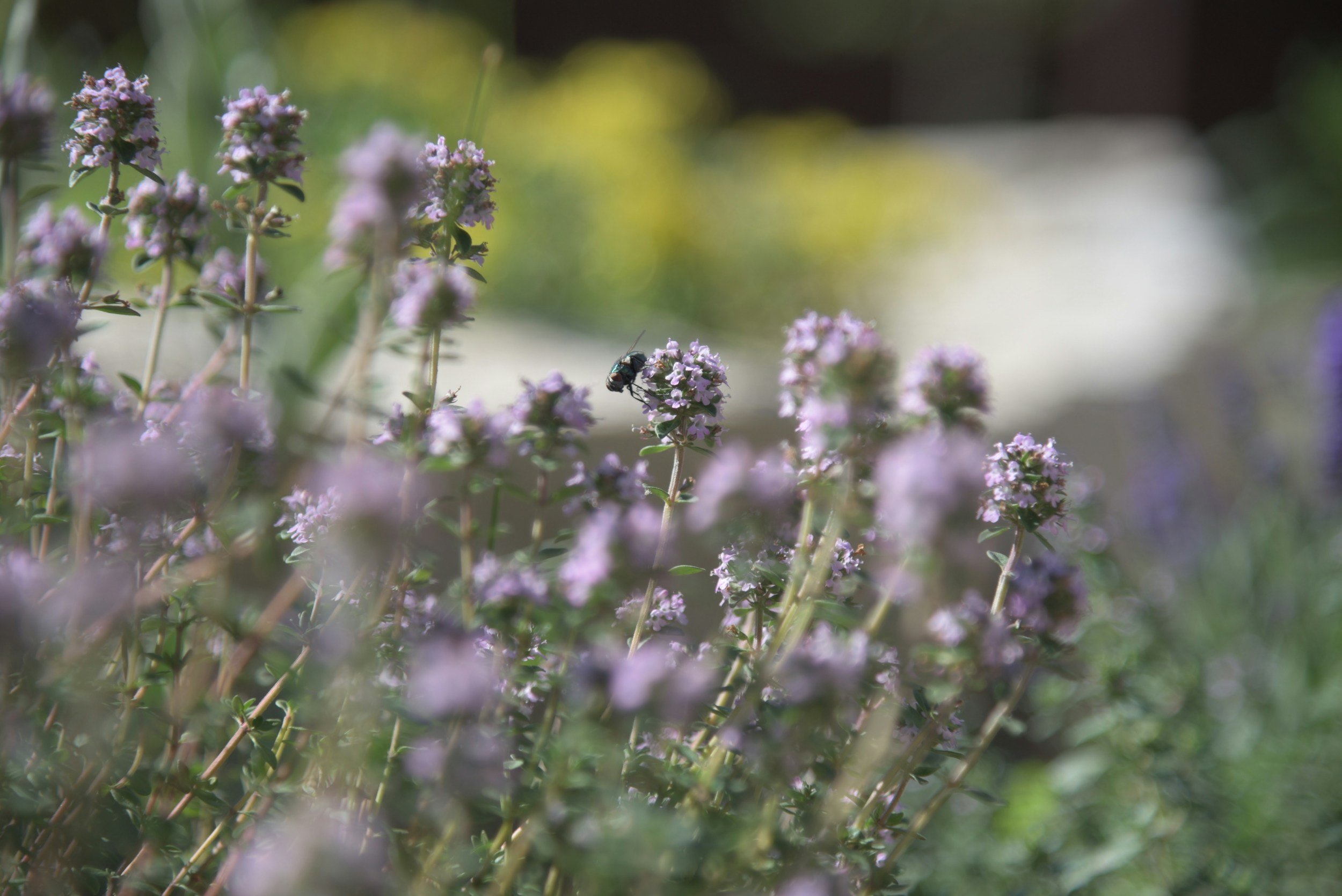
The name of my practice grew from two of my greatest passions: supporting the brave communication journeys of children and being in my garden.
A Call for Courage
I have always adored thyme, especially when it is in bloom. Thyme has a long, meaningful history of being associated with courage and bravery. This really spoke to me. Communication growth and change often require hard work, perseverance, and vulnerability. It is my profound honor to work alongside children as they build their skills, and bravely find the strength to use their own voices.
A Playful Partnership
Thyme for Speech is, of course, a play on words, but it is more than that. It mirrors my playful approach to therapy and serves as the familiar greeting I use to welcome children to our time together.
A Promise
Thyme for Speech is the promise of a respectful therapeutic alliance; providing the space for children to persevere, bloom, and grow.
A Dream Realized
This practice is the culmination of a longtime dream. For the children I serve, and as a part of my own journey, it’s Thyme for Speech!
a brief history of thyme (thymus vulgaris)
Etymology and Historical Significance
The term "thyme" originates from the Latin thymus, which stems from the Greek thymon. Linguists often link the name to thymos (meaning spirit or smoke), a root shared by the Latin fumus (smoke), suggesting a connection to the herb's pungent, incense-like aroma. Alternatively, some theories trace the name back to the Old Egyptian word tham, a plant used in mummification. This linguistic lineage is evident across Europe, reflected in names such as the German Thymian, Italian timo, and Russian timyan.
Folklore and Magic
In Elizabethan England, thyme was deeply intertwined with the supernatural. Oberon, in William Shakespeare’s A Midsummer Night’s Dream, speaks of a place where Titania, Queen of the Fairies, sleeps, saying, “I know a bank whereon the wild thyme blows”. During this era, thyme acted as a bridge to the spirit world, serving as a cultural shorthand for the realm of fairies.
Historical Applications
Beyond the realm of magic, thyme's history spans over 5,000 years, beginning in 3000 BCE as a medicinal wound dressing.
The Egyptians, Greeks, and Romans: While the Egyptians utilized it for mummification, the Greeks and Romans used it for purification, bathing in infusions and burning it as incense to frighten venomous creatures.
The Middle Ages: By the Middle Ages, it became a staple of monastery gardens, utilized for digestive and respiratory health.
The Age of Chivalry: During this era, thyme symbolized courage; knights often wore favors embroidered with a sprig of thyme and a bee.
Modern Use and Culinary Importance
Today, thyme’s antiseptic properties make it a key ingredient in anesthetics and surgical dressings.
In the kitchen, its bright, peppery flavor is indispensable. It is a cornerstone of Mediterranean and Creole cooking, featuring prominently in blends like herbes de Provence, za’atar, and dukkah.
Sources:
Grzelewski, D. (2006, September/October). Thyme on your hands. New Zealand Geographic, (81). nzgeo.com
Katzer, G. (2015). Spice pages: Thyme (Thymus vulgaris L.). Gernot Katzer’s Spice Pages. gernot-katzers-spice-pages.com
Shakespeare, W. (2000). A midsummer night's dream. In The Illustrated Stratford Shakespeare. Chancellor Press. (Original work published 1600)
Slack, S. F. (2022, November). About thyme. Columbia Metropolitan Magazine. columbiametro.com
Thiselton-Dyer, T. F. (1889). The folk-lore of plants. Chatto & Windus. archive.org/details/folkloreofplants
thyme recipes
coming soon…